Making Science Visible: How AquaBioSens communicates research through video content and LinkedIn
Scientific research often begins in the lab, but its impact depends on what happens beyond it. For EU-funded projects such as AquaBioSens, communication is not only about reporting activities. It is about helping different audiences understand why the research matters, who is involved and how the project connects to wider societal challenges.
This is especially important when the topic is technically complex. Biosensing, aquatic pollutants, monitoring systems and biohazards are not subjects most people engage with every day. A short social media post cannot explain every scientific detail. But it can create an entry point. It can show why the topic is relevant, introduce the people behind the project and guide audiences towards more detailed information.
The European Commission describes communication activities in EU-funded projects as something that should be planned from the beginning, adapted to relevant target audiences and connected to clear objectives [1]. In AquaBioSens, dissemination, exploitation and communication are therefore integrated into the project’s overall work. They support how results are shared, how stakeholders are engaged and how the project’s outcomes can be taken forward.
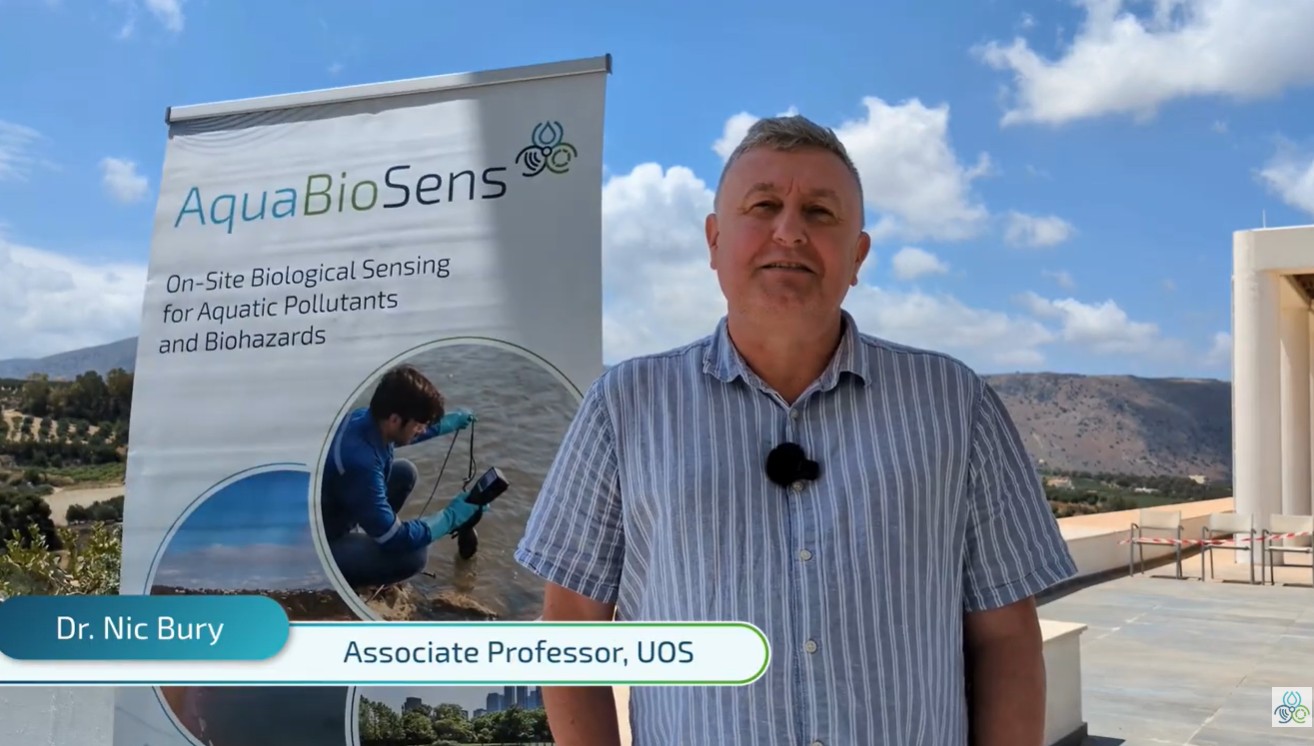
Showing the people behind the project
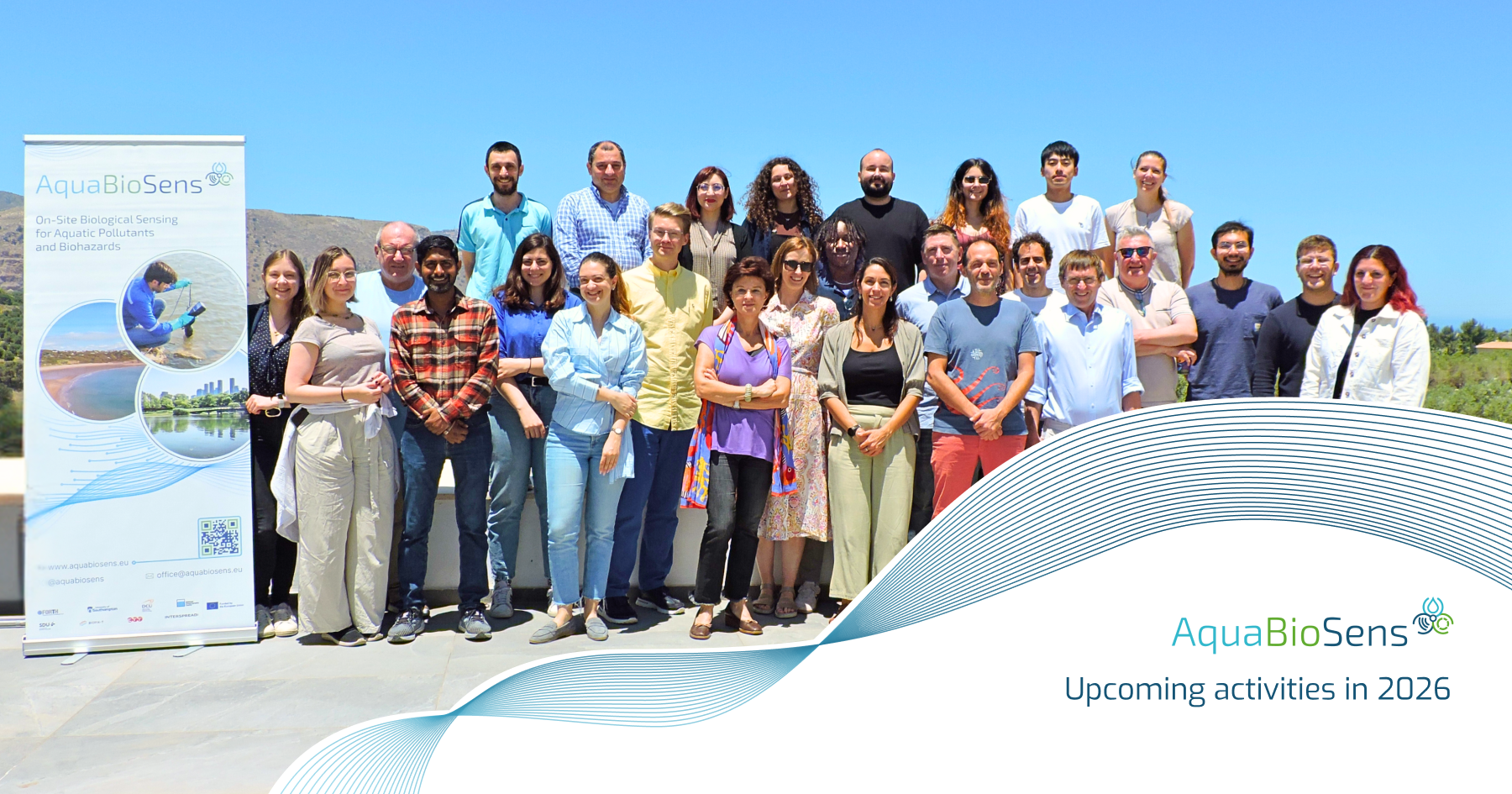
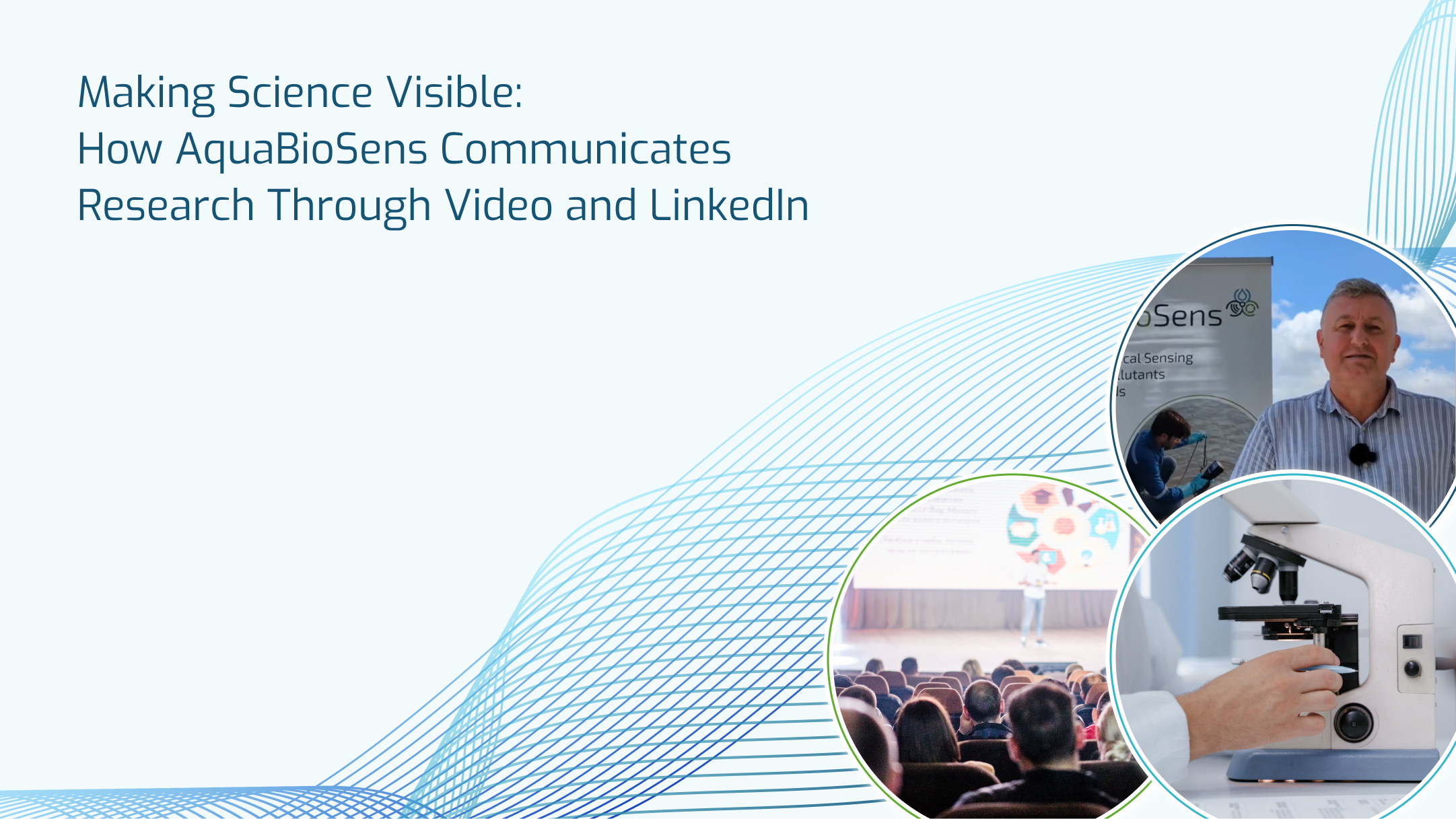
One central part of the AquaBioSens communication work has been the production of interview videos with consortium partners. This format was chosen because it helps make a scientific project more personal and easier to approach.
Through interviews, researchers can explain their role in their own words. They can describe what they are working on, why their expertise is needed as well as what sparks their personal interest in their work.. This is useful because large research projects can otherwise feel abstract from the outside. Videos make the consortium more visible as a group of people, institutions and disciplines working towards a shared goal.
Furthermore, the format is also practical as one video interview can become a source for continued storytelling throughout the project. It can be translated into several communication outputs: short clips for LinkedIn, quotes for posts, or visual material for newsletters and project updates.
This also follows a broader principle of science communication. The National Academies describe effective science communication as dependent on purpose, audience, context, tools, the communicator and the scientific topic itself [2]. For AquaBioSens, interviews help bring these elements together. They make science feel more human and relatable, while still allowing researchers to speak accurately and factually about their work.
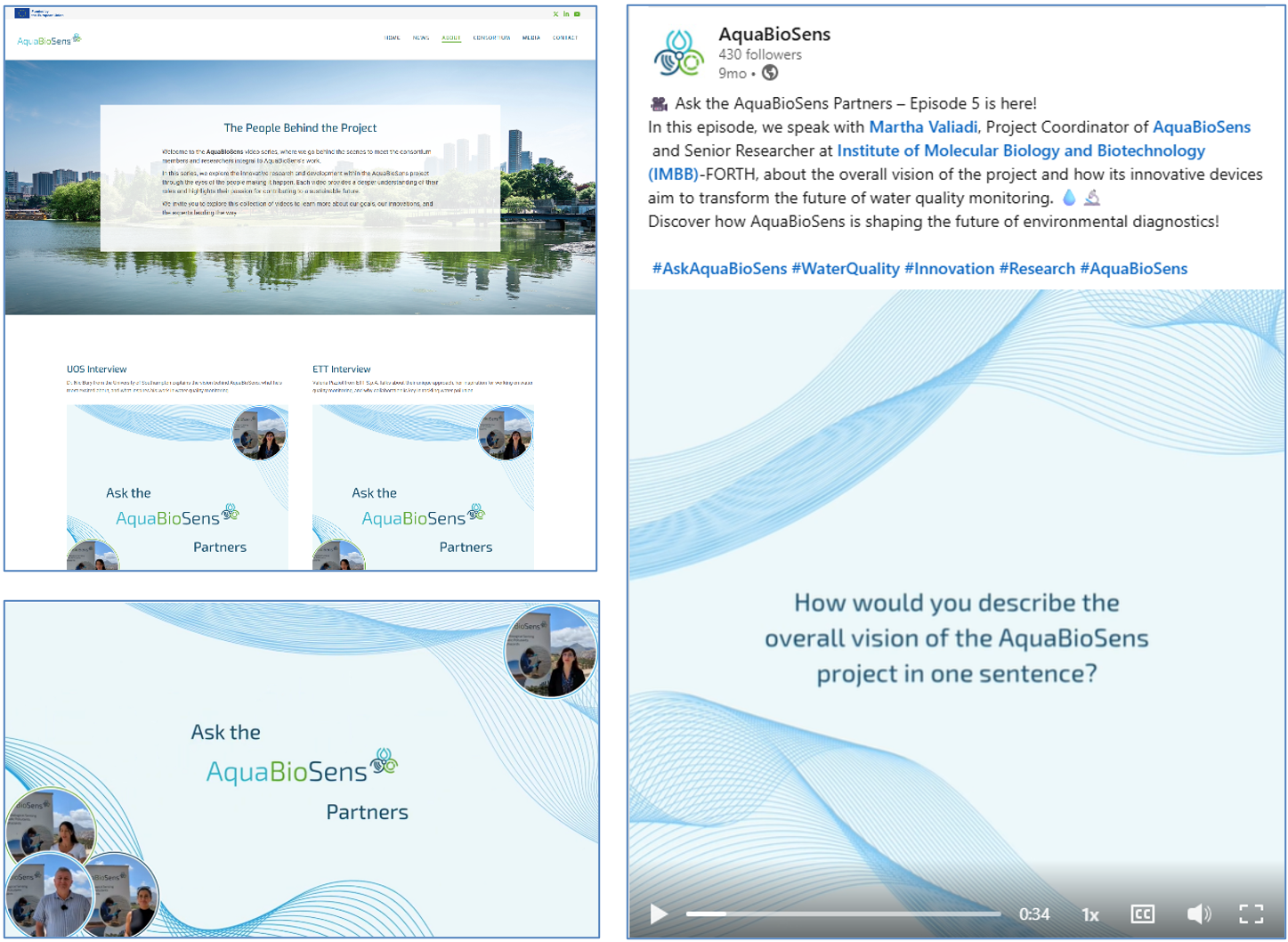
Communicating science on LinkedIn
LinkedIn is a useful channel for AquaBioSens because it reaches professional audiences such as researchers, universities, companies and policy stakeholders. Posts are filtered and ranked rather than shown only in chronological order.
In simple terms, LinkedIn selects and orders content from a large pool of posts based on relevance and engagement signals, and it can also recommend content beyond a user’s direct network [3], [4].
For science communication, this means there is no guaranteed way to “beat the algorithm”. Instead, posts need to be clear and relevant from the start. Even complex topics like biosensing or water monitoring should have a strong opening, a clear message and a visual or narrative element that keeps attention.
At the same time, scientific communication must remain accurate and credible. The goal cannot be attention at any cost, but visibility that supports understanding.
From videos to carousel posts
Recently, AquaBioSens has started to include carousel posts in its LinkedIn communication. This format is helpful because it breaks one topic into smaller, visual steps. Instead of placing all information in one long caption, a carousel can guide the reader through a short story: the challenge, the project approach, the people involved and the key takeaway.
For complex research topics, this is useful. Audiences often need context before they can understand the scientific relevance. A carousel can make that context easier to follow. It can introduce a consortium partner, summarise an interview, explain a project concept or show how one activity contributes to the wider project.
Carousels also help reuse video content in a meaningful way. An interview can be turned into a short visual summary: who the researcher is, what institution they represent, what role they play in AquaBioSens and what message they want to share. This helps the project communicate consistently across different formats.
Of course, carousel posts are not a one-size-fits-all solution. Their performance still depends on timing, audience interest, network activity and content quality. But for AquaBioSens, they offer a practical way to communicate science in a format that is more visual, structured and accessible.

Conclusion
Thus, the communication work in AquaBioSens is not only about sharing updates but about making the project more accessible. Together, video formats and social media channels such as LinkedIn support the goal of making AquaBioSens more visible, understandable and trustworthy, ensuring that the project’s scientific work creates long-lasting societal impact.
Author: Lena Reindl
References
[1] European Commission (2026). EU Funding & Tenders Portal: Online Manual. Version 1.3. [pdf] Brussels: European Commission. Available at: https://ec.europa.eu/info/funding-tenders/opportunities/docs/2021-2027/common/guidance/om_en.pdf
[2] National Academies of Sciences, Engineering, and Medicine (2017). Communicating Science Effectively: A Research Agenda. Washington, DC: The National Academies Press. Available at: https://nap.nationalacademies.org/catalog/23674/communicating-science-effectively-a-research-agenda
[3] Borisyuk, F., Zhou, M., Song, Q., Zhu, S., Tiwana, B., Parameswaran, G., Dangi, S., Hertel, L. and others (2024). LiRank: Industrial Large Scale Ranking Models at LinkedIn. [online] arXiv. Available at: https://arxiv.org/abs/2402.06859
[4] Srinivasa Ramanujam, S., Alonso, A., Kataria, S., Dangi, S., Gupta, A., Tiwana, B., Somaiya, M., Simon, L. and others (2025). Large Scale Retrieval for the LinkedIn Feed using Causal Language Models. [online] arXiv. Available at: https://arxiv.org/abs/2510.14223
Links
https://www.aquabiosens.eu/news/
https://www.youtube.com/@AquaBioSensProject
https://www.linkedin.com/company/101530850/admin/dashboard/
Keywords
science communication, dissemination, AquaBioSens, LinkedIn, research communication, EU project, interview videos, carousel posts, biosensing, water monitoring